Growing up in a family of sewing enthusiasts, I have seen my mom and grandmom using many machines. My mom had a small tailoring shop. They started with domestic manual machine. With time, their machines also changed. After 2000s, automatic machines replaced them.
There are more than 10 types of sewing machines types in the market. However, many beginners get confused after seeing varieties of machines. So, to guide such learners, I have come up with this in-depth guide on ‘8 Main types of sewing machines’.
It will tell you about various machines, their uses, pros, cons, etc. I have also shared my personal insights in this guide wherever needed. So, get ready and dive into it!
8 Sewing Machine Types:
There are more than 20 sewing machines on the market. Here are the top 10 sewing machines that you should know:

1. Mechanical Sewing Machine:

The G.O.A.T!
It is commonly seen in most homes and shops. It is operated physically using knobs, levers, a handwheel, and other controls.
Best For:
- For domestic sewing tasks,
- Ideal for mending light to medium stitching projects,
- Perfect for beginners to learn sewing,
- Sewing simple garments like pillowcases, face masks, curtains, etc.
Key Characteristics:
- It’s budget-friendly. You can repair it at home.
- A small motor powers these machines.
- Even older machines work fine if maintained properly.
Pros:
- It is a good alternative to hand sewing.
- Its metal body lasts for years.
- It has no electronic parts. So, the risk of technical errors is way lower.
Cons:
- We can sew multiple layers of fabric on these machines. But you cannot sew thick fabrics, leather, etc.
- It takes more time to sew garments than with automatic machines.
2. Electronic Sewing Machine:

Best For:
- Good for home use.
- Perfect for casual sewing projects.
- Suitable for beginners and mid-level sewists.
Key Characteristics:
- It has small knobs to set the needle foot speed, stitch length, and width.
- Some of these machines have a small LCD screen to set functions.
- You can set the stitch pattern using the given knobs. This is most helpful when you want to sew decorative stitches or blind hems.
- The seam ends don’t unravel thanks to the reverse backstitch button.
- Their automatic thread cutter and speed controller save so much time. So, if you want to sew continuously, these are the best machines to choose.
- Some of these machines have an in-built LED light. So, you can sew peacefully at night too.
Pros:
- It’s faster than a mechanical sewing machine.
- It is beginner-friendly.
Cons:
- Their stitch reset button may cause trouble when sewing large fabric.
- If you reset these settings in between, you have to start over again. So, be careful.
- If you have a power outage, your sewing work can stop on this machine.
- The motor of these machines can get damaged. It can cost a lot to repair a severe problem.
3. Computerized Sewing Machine:
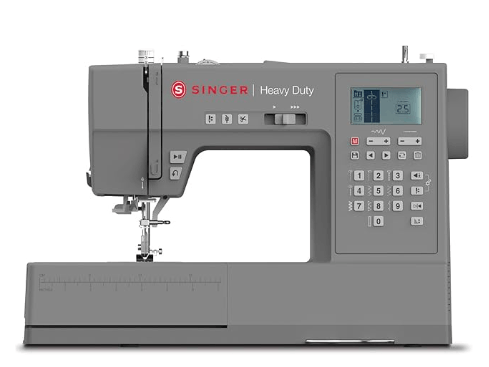
I feel this machine is like a mini-sewing robot. Just set the stitch settings, press the buttons, and you are ready to go!
Best For:
- For fashion designers, quilters, textile workers, etc.
- For home-based sewing businesses,
- For sewing delicate and stretchy fabric (as their stitches are more precise).
- For tailors who seek easy machine handling and smooth garment stitching.
Key Characteristics:
- They are more precise and accurate in stitches than mechanical and electrical sewing machines.
- They have a digital/ LCD touchscreen to choose the stitch type, length, tension, width, speed, etc.
- Most of these machines do not include a foot pedal. You just have to press the ‘start’ or ‘stop’ button on the machine.
- Basic computerized sewing machines have around 50-200. Some advanced/ heavy-duty machines have more than 500 built-in stitch options.
- I really like their ‘1-step buttonhole’ concept. They easily create buttonholes in one step. Saves a lot of time, right?
- Their speed slider works efficiently.
Pros:
- They have an automatic needle threader and jam-resistant bobbins. So, your thread will hardly snap while adding stitches.
- Modern computerised sewing machines have app connectivity. So, if you give the commands from your phone, the machine sews according to selected designs and patterns.
- Their finish is professional and neat. So, all garments look alike. It is best for sewing clothing on a commercial scale.
Cons:
- If the motherboard in these machines is damaged, its repair can be costly.
- External factors such as moisture, high voltage, power supply disturbances, etc., can damage these machines.
- If you are using older models of such machines, it may become hard to find spare parts for replacement
Mechanical vs Computerized Sewing Machine: Know The Difference
Let us see the difference between them:
| Mechanical Sewing Machine | Computerised Sewing Machine |
|---|---|
| You make all settings manually in this machine. | The settings are automated in this machine. |
| Repair is easy. Even beginners can do it with little guidance. | Repair may become costly and time-consuming |
| Need to handle the foot pedal, handwheel, and stitch setting manually | Everything is automated. You need to choose the setting and press the buttons. |
| You get fewer stitch options and a 4-step buttonhole process. | It has more than 150 stitch options and a 1-step buttonhole setting. |
| Affordable and portable. | Expensive. They have a heavyweight. |
| Best for beginners. | Best for professionals |
| Good for small-scale sewing projects | Good for large-scale sewing in companies |
4. Embroidery Sewing Machine:

Best For:
Making embroidery designs by hand is beautiful for sure! But when it comes to time-saving, precise, and fast options, an embroidery sewing machine is the best choice! These machines are:
- Best for DIY embroiderers, crafters, and hobbyists.
- It is suitable for small and mid-scale embroidery businesses
- For all sewists who need creative designs from time to time.
Key Characteristics:
- These automated machines have computerised design settings.
- Like physical embroidery, these machines also have hoops. When I was a beginner, I started with 4 x 4 or 5 x 5 hoops.
- They also have 100s of in-built patterns and stitches.
- For better connectivity, these machines can pair with digital cables,
Pros:
- Their automatic needle threader and trimmers save a lot of time (especially when you are working on a large project).
- Some combo machines include regular sewing and embroidery functions. Such machines are really cost-effective.
- They have special sensors to detect the snapping of the top and bobbin thread. It saves the machine from unexpected jamming.
Cons:
- I used to have a Singer SE9185 embroidery machine. Single-head machines like that take a lot of time. They can add stitches to one design at a time.
- If you are a professional embroiderer, it’s better to use a multi-head machine.
- The computerised systems in these machines need regular maintenance. If any of the spare parts get damaged, it may cost you time and money.
5. Overlock Machine/ Serger:
I have been using the Brother 1034D serger for 10 years now. When we stitch garments in bulk, sergers help to trim extra seam allowances.
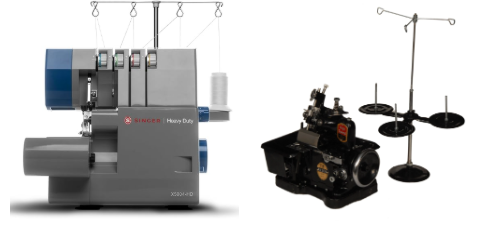
They also encase the fabric borders in the thread and sew them together again. They offer firm overlock stitches at the seamline.

Best For:
- 3-thread overlock machines are best for finishing edges, rolling hems, etc.
- 4-thread sergers are best for home sewing projects. They can cut, sew, and finish edges in one step.
- For bulk seam allowances, 5-head sergers are best. They can sew chain stitches with overlock stitches. They’re mostly used in industrial and small-scale clothing businesses.
Key Characteristics:
- Some of these machines are used to sew ruffles equally (for curtains, children’s clothes, tablecloths, lamp covers, etc.)
- They have built-in knives to cut the seam allowance from the top and bottom.
- You can adjust the seam cutting width and stitch length.
- Each serger needs more than 2 threads. So, to avoid confusion, they have color-coded thread paths.
- They can add 1500 to 5000 stitches per minute.
- A normal sewing machine has a bobbin. But sergers have ‘loopers’ to interlock the thread around the fabric’s edge.
Pros:
- They save a lot of time when you work on seams.
- As seams are trimmed and stitched simultaneously on sergers, the edge does not fray or unravel.
- While adding ruffles, the fabric does not pucker or get overstretched. It gives a clean and smooth finish, too.
Cons:
- Beginners may feel confused about handling 3-5 thread guides on sergers. I did too. It took me 3 months to get used to these machines.
- If you accidentally cut or stitch the raw edge in the wrong spot, it cannot be repaired.
- Sergers have a looped chain-stitch structure. So, they need a large number of thread spools.
6. Cover-stitch Machine:
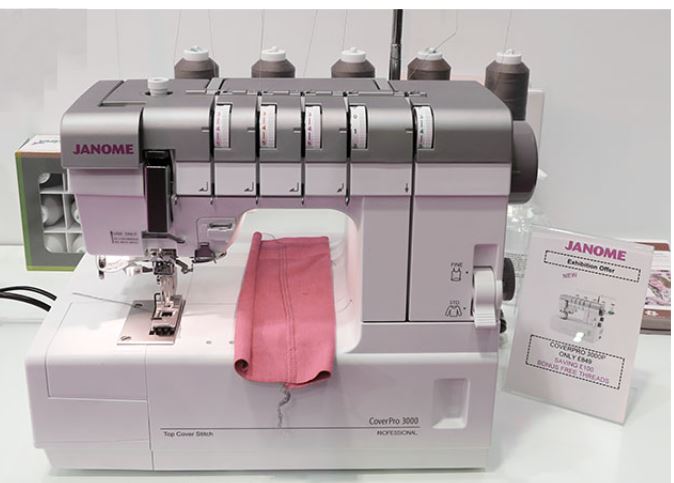
Best For:
- Sewing hems of activewear, gymwear, swimwear, etc.
- Hemming stretchy fabric, knits, georgette, etc.
- Adding two or three-line hems on t-shirts(at neckline), tops, shirts, sleeves, etc.
4 Types Of Cover-stitch Machines:
1.Single:
A normal coverstitch machine has one needle and two threads. They provide a single line of straight stitch on the top and a chain on the bottom.

2. Double or ‘Two needle’:
They have two needles and three threads. They can add two parallel stitches on top. They interlock the ladder of threads at the bottom. They can do Chain stitch and Double Cover stitch.
3. Triple or ‘Three-needle ’:
These coverstitch machines consist of three needles and four threads. They create three parallel lines. They can perform Chain stitch, Double Coverstitch, and Triple Cover stitch.
4. Top-cover stitch:
These machines can sew Chain, Double, Triple, and Top-Cover stitch. They use four needles and five threads at a time.
Key Characteristics:
- Sergers have blades to cut raw edges. But coverstitch machines do not have any blades.
- They interlock the upper and bobbin threads simultaneously with each stitch.
- With a binding attachment, you can use these machines to sew elastic in activewear.
- Regular coverstitch machines also have a foot pedal, a handwheel, a needle plate, a stitch length dial, and feed dogs. You have to operate these parts manually.
- Their dual feed dogs are used to stretch or gather the fabric for a professional finish.
Pros:
- High-quality coverstitch machines from brands like Juki, Janome, Brother, etc., can lift the presser foot up to 8 to 10 mm. So, you can add cover stitches on thick fabric, too.
- You can sew flat seams without bunching, gathering, or tunneling fabric.
- They add cover-stitches faster and more smoothly than regular sewing machines.
Cons:
- They may find it difficult to learn at first, especially for beginners.
- It becomes hard to remove coverstitches from the wrong area of the fabric. The stitches are so firm and close that you may ruin the fabric while unpicking.
- These machines are a little pricey and heavy.
7. Quilting Machine:
Quilting is my beloved memory from India. My grandma used to sew quilts for us. After shifting to the USA, I bought a quilting machine (from the Brother brand) to relive those cozy feelings. I sewed quilts for my children.
A quilt has a quilt top, batting, and backing placed like a ‘sandwich’. Sewing these thick layers of fabric becomes difficult on a normal sewing machine. That is why special quilting sewing machines are used.

Best For:
- Sewing large quilts.
- Longarm quilting machines can sew large and densely layered quilts.
2 Main Types Of Quilting Machines:
1. Domestic:

They look similar to a domestic sewing machine. But they have a larger extension table and a powerful motor.
You can sew quilts, baby cotton blankets, and multi-layered curtains using these machines.
Their neck is 9 inches or more. So, quilt layers can easily pass through them.
2. Long-arm Quilting Machine:

As their name suggests, these machines have a large frame (10-14 ft long). This long frame can accommodate heavy and long quilts.
Their robust motor can take heavy sewing work without any struggle.
Key Characteristics:
- They come with a wide flatbed to keep the quilt fabric. It prevents gathering and slipping of fabric.
- They have more than 20 stitch options to choose from.
- Like normal machines, you can lower or cover the feed dogs. So, you can easily move the quilt with your hands while sewing to make designs.

Pros:
- Hand-sewing a quilt may take days. But sewing a quilt with these machines takes a few hours! Thanks to their fast stitching speed. Plus, all stitches look alike.
- Automated quilting machines help you to sew intricate thread designs on large quilts.
Cons:
- It can be costly.
8. Industrial Machine:

This is a powerhouse of sewing machines. You can sew anything on it:
- Car interior: seat, covers, etc.
- Indoor furniture: sofa cover, chair cushion, curtains, etc.
- Apparel: t-shirt, tops, pants, etc.
- Underwear, gymwear, sportswear, activewear, etc.
- Bags, tents, caps, hats, etc.
Best For:
- Sewing clothes and other items on a large scale.
Key Characteristics:
- They can sew 3000 to 8000 stitches per minute.
- Their powerful motor can withstand long-term running.
- They can sew on from thick fabric like canvas to thin ones like silk, satin
Pros:
- It saves a lot of time.
- It is highly efficient to sew garments, accessories, etc., in bulk.
Cons:
- They are task-specific. One machine can do one job. However, domestic sewing machines can do multiple sewing tasks with the same setup.
- They can occupy a large space. Plus, they need high maintenance.
Key Takeaways:
Domestic sewing machines are good for beginners. If you master sewing skills, you can move to electric and automated machines.
Task-specific machines are also important to learn. Chainstitch machines are excellent for adding strong chain stitches. Sergers are good for sewing overlock stitches at the seamline.
For quilts and dohars, you can use quilting machines. Long-arm machines can perform heavy-duty, large-sized quilt making.
Which of these machines do you use? Let me know. Also, if you need any help while learning sewing, send me a message by email! I am happy to help anytime!
FAQs:
1. What Is A Heavy Duty Sewing Machine?
These machines can sew thick materials such as leather, upholstery, jute, canvas, etc. They have a motor of 550 to 700 W. They can add 1,100 (portable) to 5,000 (industrial machine) stitches per minute.
2. What Is A Portable Sewing Machine?
It is a mini-sewing machine that we can take anywhere. It is so lightweight and compact. You can perform small sewing tasks. These machines run on small AC adapters, batteries, etc. Their outer frame is made of plastic.