
One day, I was conducting a sewing workshop for young moms. We were learning stitch types using a plain linen fabric. Everything was going well. But after sewing, we noticed that many of them had skipped stitches.
Has this ever happened to you? Are you also wondering why your sewing machine is skipping stitches? Don’t worry. It is very common. I got you!❤️
I have written a thorough guide to solve this issue. You can get perfectly aligned stitches using the hacks given below! I have shared thorough troubleshooting tips for this problem.
Read ahead to learn more!
How To Identify ‘Skipped Stitches’?
These stitches look like these:
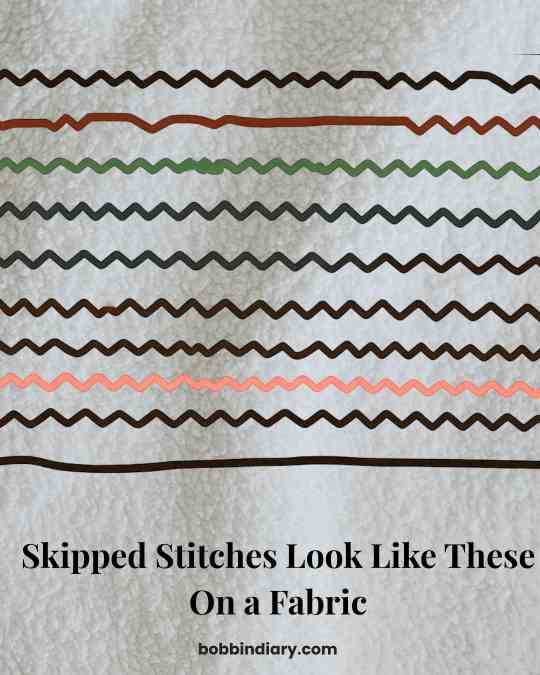
- They do not look equal.
- The needle might get stuck in the fabric with such stitches.
- They are not aligned in a line.
- They form loose loops without slack.
Why Is My Sewing Machine Skipping Stitches? Know the 7 Main Reasons:
Here are the 7 most common reasons behind skipped stitches in a sewing machine:
- Incorrect Needle Size and Type
- Inserting the Wrong Needle
- Damaged or Dull Needles
- Wrong Threading
- Using Cheap-Quality Threads
- Lint Build-Up
- Mismatched Internal Timing Of Machine
Let us look at each reason one by one below:
Reason 1: Incorrect Needle Size :
This is the biggest RED FLAG for skipped stitches.🚩
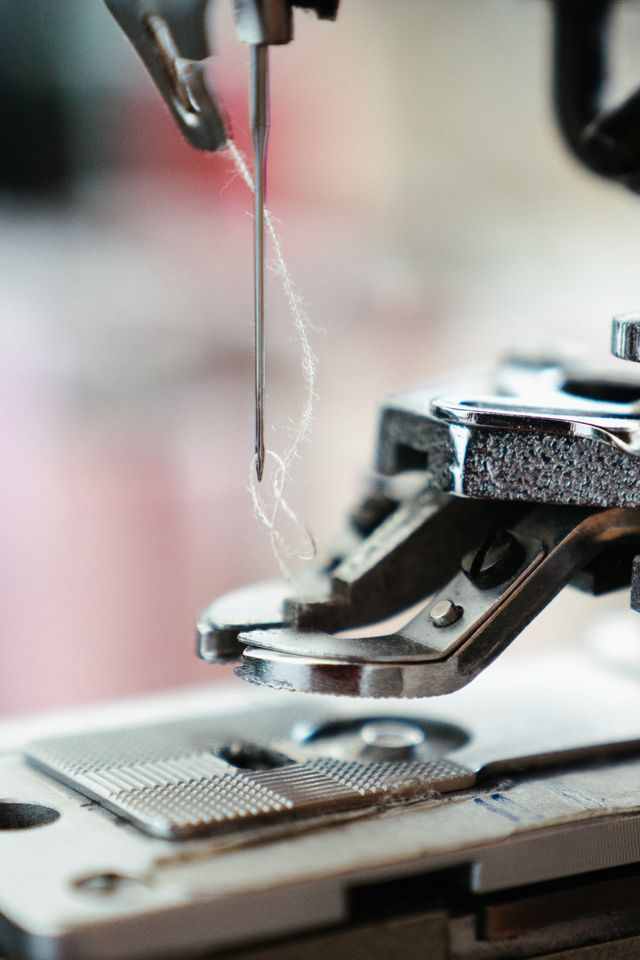
1. Too Small Needle:
If you use a small-sized needle on a thick fabric like denim, it will bend or flex backwards.
This happens because such a tiny needle may not withstand the drag and tension needed to stitch thick or dense fabric.
So, its tip mostly misses the bobbin hook, resulting in skipped stitches.
2. Too Large Needle:
However, a large needle on thin fabric like cotton, silk, or linen is also a wrong combo.
I once used a long needle size 100/16 to sew my cotton top. It created large holes in that fabric. But that needle created bigger holes than required.
So, the thread was stitched, but it was left behind in loose loops.
Solution:
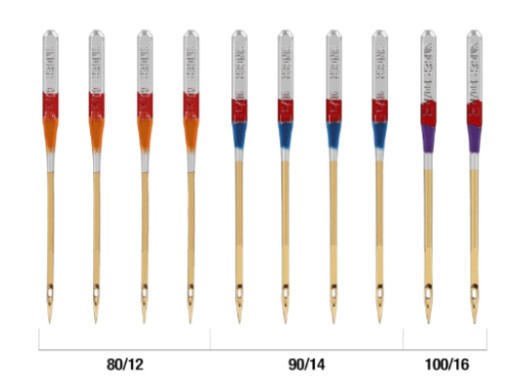
Use a right-sized needle for the required fabric type:
- Size 60/8 or 70/10: Good for thin fabrics like silk, chiffon, organza, etc.
- Size 80/12: Best for medium-weight fabrics like cotton, linen, polyester, etc.
- Size 90/14 or 100/16: Ideal for dense or tightly woven fabrics like jute, denim, twill, canvas, etc.
- Size 110/18: Useful for multi-layered fabric like industrial uniforms, heavy-duty bags, etc.
Reason 2: Using the Wrong Type Of Needle
Each needle is designed for a specific fabric type.
What Happens When You Use the Wrong Needle On The Given Fabric?
1. Using a Ballpoint Needle On A Thick Fabric:
Ballpoint needles are meant for sewing stretchy fabrics or knits. Their tiny ball-shaped tip is designed to slide or slice through the stretchy threads.
But this needle cannot pierce through dense fabric like jeans, denim, jute, or canvas. It will slide when going downwards.
If you try harder, it may slice through this fabric. But the thread misses the timing to connect with the rotary hook. As a result, it skips stitches.
2. Using a Universal Needle On Stretchy Fabric:
They say you can use a universal needle for all kinds of fabric. Yes, you can. But not on knits or elasticated fabric, especially for longer.
It glides across the fabric instead of slicing. In some cases, this needle can push the stretchy fabric down near the needleplate.
Solution:
Use the right type of needle, such as:
- Universal Needles: Lightweight fabric like cotton, linen, silk, polyester, etc.
- Ballpoint Needles: Stretchy fabrics like Jersey, cotton knits, hosiery, etc.
- Stretch Needles: Elastic fabrics like Lycra, spandex, etc.
- Leather Needles: Good for sewing leather items
- Microtex Needles: Thin and delicate fabrics like silk, satin, faux leather, georgette, etc.
- Jeans Needles: Dense fabrics like canvas, jute, denim, etc.
Reason 3: Damaged or Dull Needles
Even if you do everything right, this small mistake can mess up your whole sewing project.
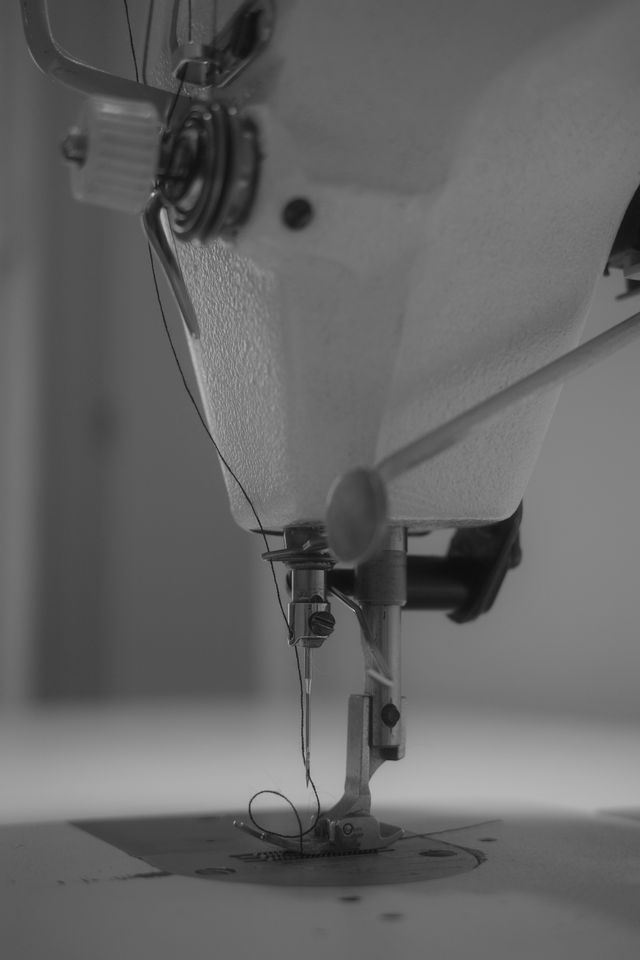
Here’s What Happens:
1. Bent Needle:
Each needle is expected to move down at a specific point to prick the fabric. A tiny bend in the needle’s tip area can change its path.
So, if it misses the expected path, where does it go?
This needle can enter the bobbin area. So, the thread loops form, but far away from the rotary hook.
The hook can miss the thread loop, resulting in a skipped stitch. If you keep running the machine, it can form a series of skipped stitches on the fabric.
2. Blunt Needle:
Due to prolonged use, the needle may bend. Its sharpness may decrease.
So, what will happen when using a blunt needle?
It will push fabric threads ahead. It won’t slide between the threads to make holes for stitches.
So, as a result, the needle gets excess tension and drag. It goes backwards when it moves down for stitches. Hence, our machine skips stitches.
Solution:
- Change your machine’s needle every 8 to 12 hrs, depending on how much you use it.
Reason 4: Wrong Threading
Sewing threads must pass through various thread guides, hooks, and paths to create tension for firm stitching. If the threading goes wrong, it creates messy skipped stitches.
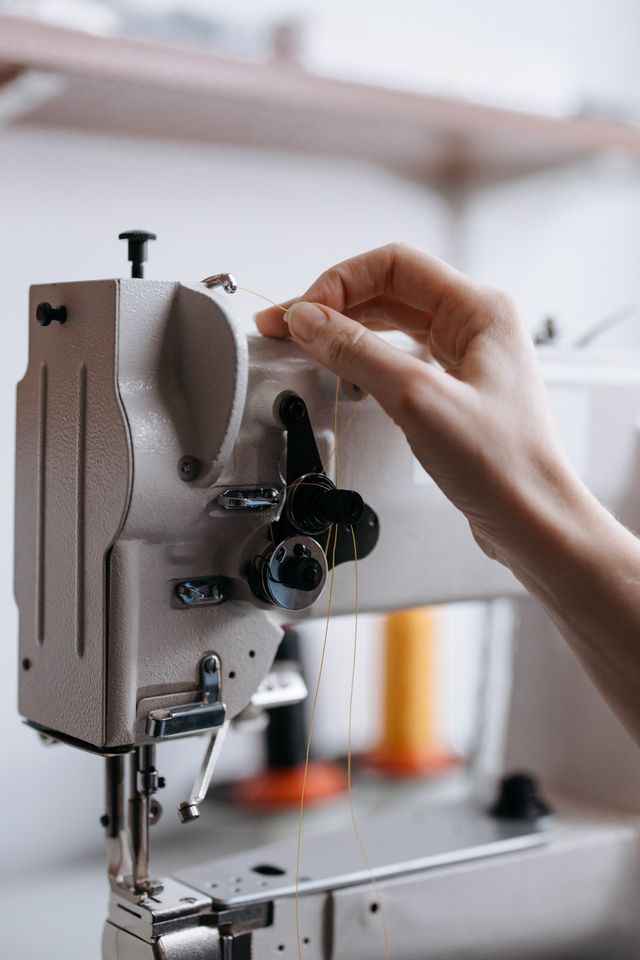
Here’s Where The Thread Can Get Missed:
1. Tension Discs:
If the thread misses through the tension discs, it may not remain intact. So, excess thread feeds through the needle, causing loops instead of tight stitches.
2. Bobbin Case:
If you keep the bobbin case in the wrong direction, it will not release the bottom thread.
The bobbin inside the case will spin without any control. So, all your stitches get skipped.
3. Needle Guide:
Each needle area has a small final needle guide to pass the thread. It holds the thread tightly while stitching.
If you miss this guide, the needle does not form stitch loops. But it gets a sudden drag.
4. Take-up Lever:
This silvery arm moves up and down. It offers the required slack to the thread when it forms stitch loops.
If you miss passing the thread through this arm, the thread remains tight. It does not even reach the rotary hook and snaps the stitch loop.
Solution:
- Check all guides when you pass the thread.
- Make sure you have placed the bobbin case in the right direction.
- Your bobbin must be filled sufficiently.
- Also, make sure your machine’s take-up lever runs smoothly without any blockages.
Reason 5: Using Cheap-Quality Threads
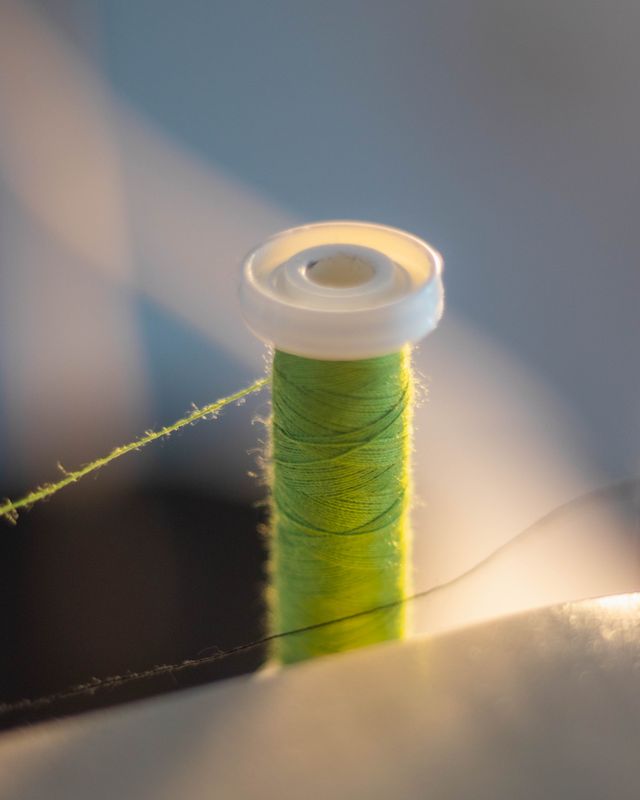
Cheap-quality threads snap easily under high tension or fast stitching.
Their rough, fuzzy texture creates unnecessary lint buildup in the thread guides or needle plate.
Such threads have extremely low or zero elasticity. Some of them may untwist easily. This creates messy loops and may eventually skip stitches.
They also form uneven loops because of their low thread construction.
Solution:
- Always use high-quality sewing thread to avoid such issues. They are made from high-quality staples. They can withstand heat, lint, and tension.
- Sew a few stitches on a scrap fabric to test the thread quality.
Reason 6: Lint Buildup
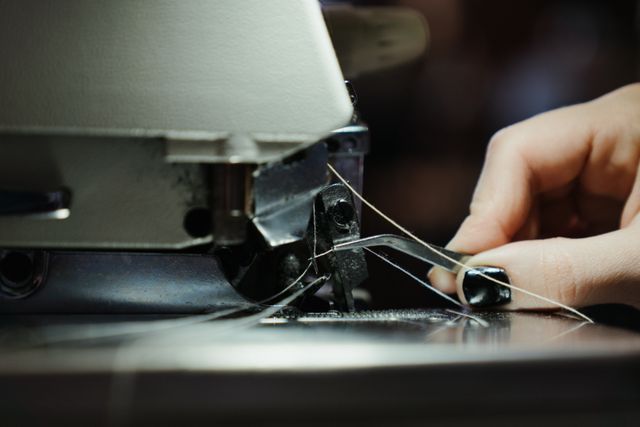
As we discussed above, some threads create lint. It starts in the upper thread guides. But it can later clog the bobbin, bobbin case, rotary hook, and needle plate.
If this lint clogs the rotary hook, the hook cannot move smoothly after the needle.
The required thread loop gets missed. This causes a skipped stitch.
Sometimes, tension discs get jammed so heavily that they remain open. So, the thread may not receive proper tension. It forms loose, loopy stitches.
Solution
- Regularly clean your machine’s parts. I deep clean them each week.
- Use small brushes to remove lint buildup in tiny areas like the rotary hook, levers, etc.
Reason 7: Mismatched Timing To Catch Rotary Hook
First, Let’s Understand The Working of A Rotary Hook:
- A needle moves down to form a stitch.
- It carries the top thread with it and moves below the needle plate.
- Then this needle starts to move upward.
- A slack forms in the thread, creating a tiny loop behind the needle eye.
- At the same time, the rotary hook’s tip moves behind the needle and catches the loop to complete the stitch.
So, the rotary hook’s TIMING matters a lot.
What Happens If The Rotary Hook Arrives Too Early or Too Late?
1. Rotary Hook Arriving Too Early:
If it arrives too early before the needle, it will move in the blank space without top thread. It will not grab the loop. So, the stitch will not form, and loose, unstitched thread will appear on the fabric.
2. Rotary Hook Arriving Too Late:
If the hook moves after the needle moves upward (to go above the needleplate), it will miss the top thread.
Why Does This Happen?
- If the sewing speed is faster than expected, the hook may miss the right time to catch the top thread.
- If you use a small needle to sew tightly woven or extremely dense fabric, it takes time to slice through the fabric’s threads. By then, the rotary hook already sweeps under the needle plate. As a result, the thread loop misses the hook.
Solution:
- Check the hook’s timing on a scrap fabric before you start sewing.
- Use the right type and size needle for the given fabric.
- Clean the lint buildup in the rotary hook to avoid jamming.
Key Takeaways:
I hope you got helpful tips from this guide on ‘why is my sewing machine skipping stitches?’
The wrong needle type or size, low thread quality, mismatched rotary hook timing, lint buildup in the sewing machine’s parts, or damaged needles- anything can skip stitches.
If your machine still shows issues like off-timing of the rotary hook, stuck tension discs, or needle damage, seek help from professional repairmen. Service your machine regularly to avoid these problems.
Follow the solutions and hacks in this guide to avoid skipped stitches. With regular practice, you will hardly miss any stitches in the future!
If you need more help, you can email me. I am happy to help more sewing enthusiasts like you!
Do let me know your feedback on this guide in the comments below!
FAQs:
1. How To Fix Skipped Stitches On A Sewing Machine?
To fix stitch skipping on a sewing machine: re-thread the machine, use the right size and type of needle, remove lint and debris buildup from all parts, replace damaged needles, and ensure the bobbin and rotary hook are working.
2. Can A Sewing Machine Skip Stitches On A Thick Fabric?
Yes. A thin needle may not penetrate thick fabric to form a stitch loop. So, it can miss stitches on tightly woven fabric like denim.

