As a professional tailor, my mom always had a box of sewing threads. On my very first day of learning, she handed me a universal, aka, all-purpose thread. She taught me how to use it by hand and machine sewing. As I grew, I got to explore other types of sewing threads- cotton, rayon, silk, and much more!
Whether it is sewing, quilting, serging, or embroidery, these yarns are used in each project. If you are a beginner, learning about these variations can help you take a step ahead!
I know it is really overwhelming to know and use so many threads. But don’t worry! I am here to support your journey.
In this article, we will learn about different sewing threads and their uses. I have also given my personal insights on each of their types.
So, let’s explore them!
12 Types Of Sewing Threads Explained:
Here is a simple classifiaction of sewing threads according to thier yarns:

Let us see the common thread types in sewing(according to their material):
1. All-purpose Thread:
What Is That?
It’s all POLYESTER! 100%.
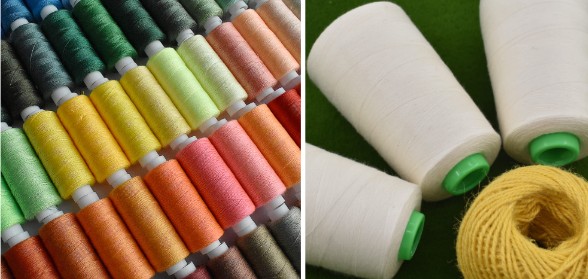
It includes spun polyester or cotton-wrapped polyester
Why Use It?
While sewing, you will notice that this thread hardly snaps (almost NEVER!!). Hence, it is perfect for sewing natural and stretchy fabrics.
I feel- it is very reliable, slightly elastic, and smooth-working! And, cost-effective too!
It is considered the ‘universal’ or ‘standard’ thread. Its elasticity helps the seam to stay firm on stretchy fabric.
Special Tips:
I use a 40-weight or 50-weight size of this thread from Gutermann (for this brand, it is named ‘sew-all’ thread). It is perfect for strong seams without adding bulkiness to the fabric.
For this thread size, the needle size of 80/12 or 90/14 is perfect.
Do Not Use It For:
- heavy-duty sewing projects like leather belts, quilts, jute, upholstery, canvas, etc. All-purpose threads may not hold stitches in these types of items.
- thin or delicate fabrics like silk or organza. The seams may pucker if you use these threads.
2. Cotton Thread:
What Is That?
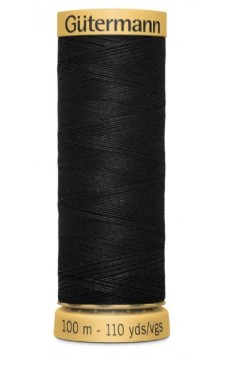
It is made of 100% natural pure cotton fibres. Its biggest advantage is- it is safe to skin! Due to its Hypoallergenic properties, you can safely sew clothes for sensitive skin. So, it’s best for sewing baby clothes.
(Some cotton threads may undergo chemical treatments to increase strength. But, if you have really sensitive skin, look for organic cotton threads with OEKO-TEX Certification)
This thread is matte, soft, and smooth. But it is not as strong as all-purpose or polyester thread. It also shrinks after washing.
Why Use It?
It looks soooo aesthetic. If you are thinking about sewing quilts or dohars, cotton stitches always have an elegant rustic look.
Besides its durability, this thread is the classic choice of tailors! It is highly heat-resistant (in contrast, polyester threads can melt at high temperatures).
If I am sewing cotton, linen, or any other lightweight fabric, cotton thread always goes well with them.
Special Tips:
- This thread can shed, split, or break on rough use. They are not made for heavy-duty fabrics.
- However, they are perfect for sewing lightweight and breathable fabrics- cotton, linen, rayon, etc. I also use them in patchwork and quilts.
3. Polyester Thread:
What Is That?

It is a petroleum-based plastic fibre. It is 100% synthetic.
These threads are made from synthetic polyester fibres. They offer great strength and elasticity. They retain their original color even after many washes.
Why Use It?
I admire the strength of these fibres! They do not snap easily.
No shrinking, no color fading! However, they can melt if you iron the stitches at a high temperature.
If you are thinking about sewing woven and knit fabrics like casual or activewear, polyester threads are the perfect choice. Thanks to its slight elastic give.
Filament-type polyester is used in sewing tents, backpacks, etc., for outdoor gear. It is much stronger and more durable.
Special Tips:
- I also use them for machine embroidery and decorative stitching.
- In such cases, I use fine polyester threads with a needle of size 70-80.
Note These Tips:
Even though this thread is strong and durable, many people avoid using it. Polyester threads or garments trap heat and moisture. It feels humid, hot, and sticky, with body sweat.
Also, it is non-degradable. Each polyester can release 1000s of fine microplastic fibers into soil or water when discarded. So, it’s better to use it, but within limits.
4. Cotton-polyester Thread:
What‘s It?
Pure cotton sheds tiny fibres, breaks, or loses dye. Polyester thread can melt at high temperatures. So, if you are ironing it, be careful about the heat!
To overcome such issues, a blend of cotton and polyester is a perfect option! IT IS A HYBRID!
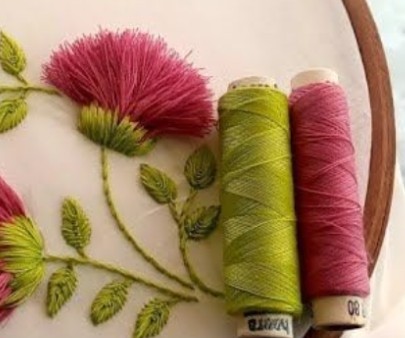
This thread has a polyester core. And cotton thread fibers are wrapped around this core.
Why Use It?
It’s a cotton-wrapped polyester thread. I feel it’s a perfect example of beauty with brains!
The upper cotton layer is the ‘beauty’. It gives a rich, aesthetic look.
And the inner polyester core in the ‘brain’. It offers durability and strength. That’s why the thread does not snap even under high tension.
We know that polyester can easily melt under heat. But the cotton layers make this thread heat-resistant.
The weakness of one is covered by the other!! Brilliant, right?
Due to its amazing properties, this thread is widely used in stitching denim, jeans, workwear, kids’ clothing, and other heavy-duty apparel.
Special Tips:
- Even though it is heat-resistant, I avoid pressing it under a very hot iron for a long time. The outer wrapped cotton can become dull or discolored.
- Also, extremely high heat can melt the inner polyester core.
5. Nylon Thread:
What Is That?
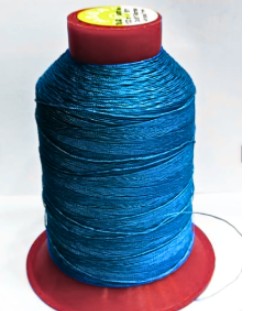
Nylon is a 100% synthetic fibre. This brownish thread has a silky shine and a soft feel. It is resistant to moisture, heat, tension, and chemicals. So, this is one of the strongest sewing threads.
Why Use It?
Its elasticity, flexibility, and strength are exceptional! When it comes to heavy-duty sewing, nylon is always my first choice.
Other threads, like cotton, silk, or polyester, may degrade under UV exposure. But some varieties of nylon are resistant to UV rays, too.
That’s why these threads are used to sew swimwear, marine clothing, workwear, and outdoor apparel. They offer the least wear and tear, even on harsh use.
It can stretch and bend with the material. And, it remains firm under friction. This prevents seams from unnecessary wear and tear.
These threads are meant to withstand high stress and tension. So, apart from clothing, they’re also used to sew:
- Sofas, sofa covers, car seat covers, etc.
- Cushions, tents, sails, etc.
- Covers of boats, cars, grills, or industrial machinery.
- Thick canvas or vinyl items
- Shoes, sandals, etc.
- Leather bags, belts, jackets, skirts, etc.
- Tote bag, handbag, duffle bag, travel bag, wallets, etc.
- Gun holsters, sheaths of sharp or large knives, etc.
Nylon Thread Has 3 Types:
1. Bonded Nylon:
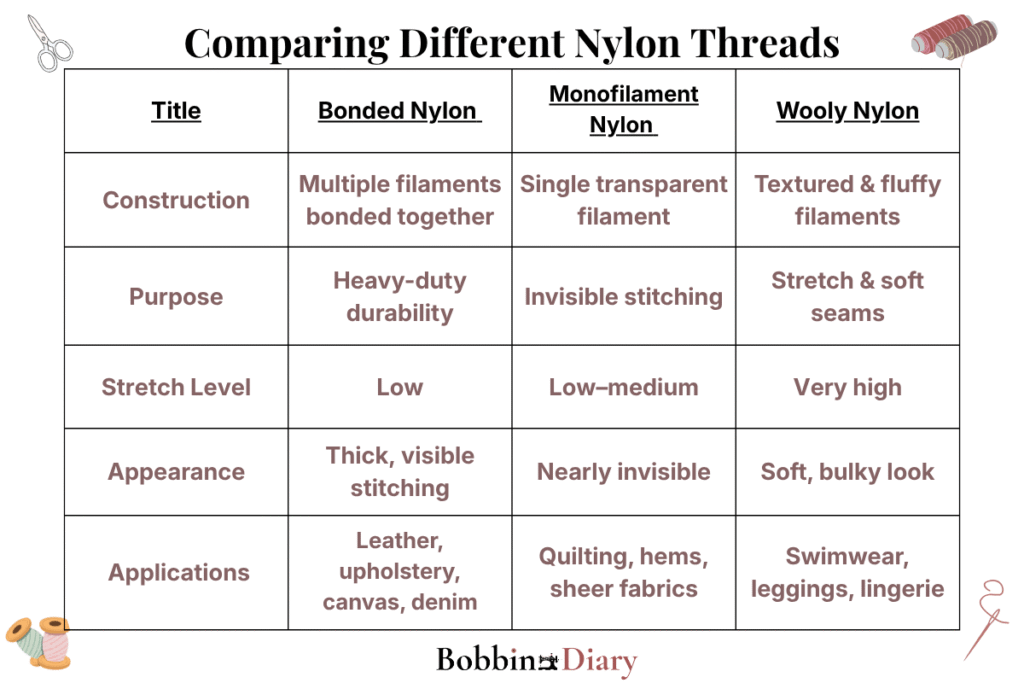
Multiple nylon filaments are twisted and bonded together using special resins. Such filaments are bonded nylon threads.
They are well known for their superior strength. That’s why these threads are mostly used in sewing heavy-duty apparel like workwear, shoes, raincoats, etc. A bonded nylon thread, Tex 70 or Tex 138, is suitable for such projects.
These resin coatings keep the thread away from fraying and unravelling. They are a little thicker than regular nylon thread. So, such thick threads are suitable for heavy-duty sewing machines, industrial machines, or leather machines.
As is obvious, thick needles are needles to sew with such threads.
2. Clear Nylon:

It is also known as the ‘invisible nylon thread’. It has three main types:
2.1 Monofilament:
As its name indicates, a monofilament thread is made from a continuous nylon strand. It is elastic and transparent.
They are used in sewing sheer fabric, quilting, invisible hems, adding bindings, etc.
2.2 Multi-filament:
It is thicker than monofilament thread. Multiple strands of synthetic nylon are twisted together to form a single smooth strand.
Due to this cohesive structure, these threads are much stronger and more durable than monofilament nylon.
These threads are not glued together (just twisted), so they frequently fray while high-speed sewing.
PS: This nylon thread is different from bonded nylon, even though both have similar construction.
3. Textured-Woolly Nylon:

This is a textured thread with soft stretch. These threads are not exactly invisible.
They are not spun or twisted together. Instead, these threads are crimped in coils and texturized in a certain way under tension.
So what happens is- the thread appears thinner when you stretch it, and it feels fluffy and smooth when you keep it relaxed (not stretched).
Sewing with these threads produces a smooth, highly elastic seam finish. I find these threads perfect for serger and coverstitch machines. Most of the swimwear, gym wear, and lingerie are sewn with these woolly nylon threads.
They are a perfect combo of comfort and strength!
Here is a small comparison table for all kinds of nylon threads that we discussed above:
Special Tips:
These threads resist moisture and humidity. But they are prone to melting. Harsh sunlight or high-heat ironing can degrade these threads faster.
6. Silk Thread:
What Is That?
Do you know?: silk threads are actual natural protein fibres!
Silkworms make these fibres to make their cocoons. These natural yarns are fine, strong, and super soft!
They have a rich feel and look! That’s why they are mostly used to sew silk, wool, or embroidery-embellished apparel. Whether it is basting, sewing buttonholes, adding decorative stitches, or finishing embroidery, silk threads can do ALL!
Why Use It?
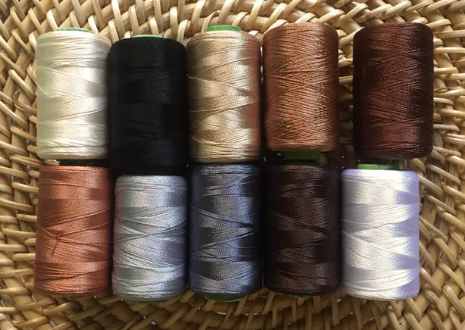
Firstly, silk threads are FINE AND SLIM!- so, they can easily pass through delicate fabrics without damaging or leaving marks.
Secondly, they have good NATURAL STRETCH! So, their seams can easily be without snapping.
Thirdly, they FLATTEN NATURALLY: if you iron silk thread seams, they will easily get pressed, leaving a smooth finish. You will hardly notice such a seam.
Special Tips:
These threads are very sensitive to harsh heat, too hot water, and strong detergents. It’s better to keep them away from such things.
Dry-clean the garment or wash it in mild, soapy water. Air dry them away from sunlight.
7. Metallic:
What Is That?
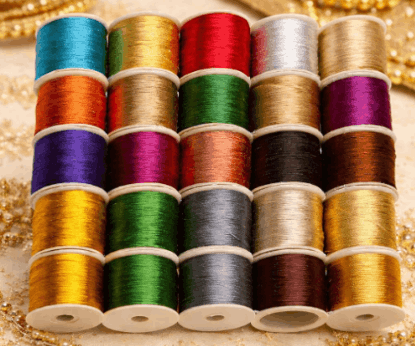
Reflective metallic or metalized plastic films are blended with nylon, rayon, or polyester yarns to make metallic threads. The blended polyester adds shine to these threads.
They have a gold, bronze, or silver shimmer! They are strong and slightly sparkly.
Why Use It?
I use these threads to add an elegant touch to the seamline.
Not only on garments, but they also look best on home decor items (for sewing seams on curtains, table covers, pillow covers, etc.).
Nylon/ polyester blend makes them more durable and stronger.
Special Tips:
These threads might snap when sewing quickly. Always lower the machine speed and increase the thread tension to avoid thread breakage.
For decorative stitching, I generally use a single-needle embroidery machine when using this thread.
8. Rayon:
What Is That?
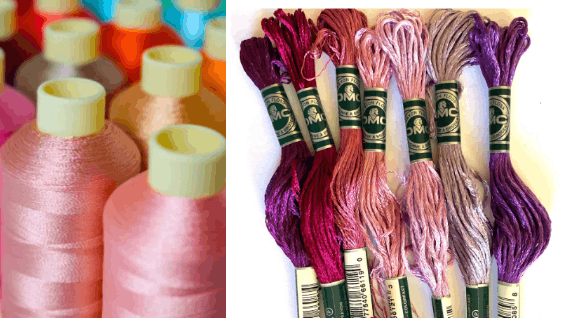
Have you ever seen those silky soft tassels? It’s rayon thread. Many people use rayon instead of pure silk to make such accessories due to its affordability.
Rayon threads are made from cellulose of wood chips, pulp, or bamboo.
Although it is semi-synthetic, it is highly lustrous, silky, and smooth. If you are sewing silk, satin, or any smooth fabric, this thread will blend in seams effortlessly.
It hardly loses dye, and its color remains the same for years!
Why Use It?
I love adding stitches with rayon. Not only is it a good alternative to cotton threads, but it also stays flat at the seamline.
That’s why this thread is a top choice for me when stitching soft fabrics like satin, silk, or organza, etc. Its stitches look very natural and shiny.
Special Tips:
As it contains cellulose, rayon fibre is sensitive to heat, moisture, bleach, and harsh detergents. Sometimes I have accidentally caused heat marks on the rayon threads while ironing.
At such temperatures, its stitches may melt or burn.
I have noticed that this thread can snag or snap quickly. So, to prevent such troubles, I use a fine needle of size 70/10. Also, I prefer using low thread tension to avoid unnecessary snapping of these threads.
9. Linen:
What Is It?
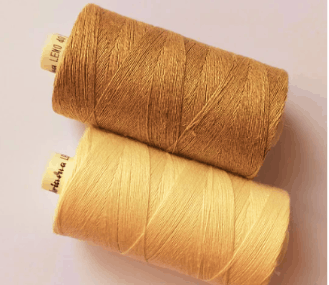
This is a natural fibre obtained from the cellulose of the flax plant. It’s totally eco-friendly and strong.
Linen threads are one of the best alternatives to cotton threads. Thanks to their durability and water-resistant abilities.
Why Use It?
Do you know?: Linen is naturally anti-bacterial.
I like this quality the most about linen. That’s why it is perfect for sewing bedding, baby clothes, or delicate garments.
Plus, it has a naturally glossy shine. Its stitches suit well with fabrics like silk, linen, leather, rayon, cotton, etc.
Special Tips:
I mostly lubricate these threads with natural beeswax. This wax coating enhances the thread’s functionality.
So, its friction is reduced while adding stitches. In this way, the thread can easily pass through thick fabrics, especially in upholstery.
If you are struggling with puckered fabric after stitching, use this trick. Waxed linen thread offers a firm knot without leaving or stressing the fabric.
10. Jeans / Denim:
What Is That?
It’s made from a core-spun polyester-cotton blend and plain cotton yarns.
For sewing seams, pockets, or collars, I use thick denim thread of Tex 60, 80, or 105 for topstitching.
Why Use It?
All denim threads show excellent tensile strength and longevity. They are made to withstand heavy physical stress, rough handling, rough surfaces, and harsh chemicals.
They will hardly break when sewing. So, you can sew thick or multiple layers of denim fabric easily.
I just love denim threads from Gütermann and Coats & Clark Dual Duty Plus. They are strong, durable, and easy to use.
Special Tips:
There is, as such, no special care to be taken for denim threads, as they can withstand harsh environments.
The only care I always take is- I wash such fabrics (with denim thread seam) inside out in cold water only.
12. Elastic Shirring:
What Is That?
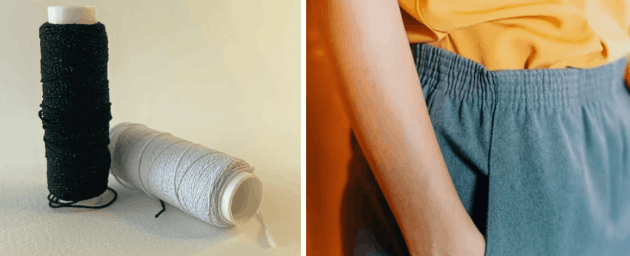
It is a thin elastic thread used to sew elastic waistbands, sleeves, fitted bedsheets, collars, bust-panels, etc.
These threads have a core of natural rubber/ latex material. Sometimes, synthetic elastomers or spandex are also used in the core. And, its outer layer is made up of cotton, nylon, or polymer fibres.
These threads are known for their excellent elasticity and flexibility. Three threads are commonly found in baby clothes, skirts, frills of curtains, table covers, etc.
Why Use It?
These threads are a little thicker than all-purpose or regular cotton threads.
I put these threads in the bobbin case. And, pair them with the suitable top thread for sewing elasticated waistbands. So the elastic threads come at the underside of the fabric. And the top thread is visible on the outer side.
Always sew them in parallel rows to get an ample amount of gathered fabric.
Special Tips:
Elastic threads can shrink, melt, or tighten on pressing with a hot iron. It’s better to leave those areas while ironing. If necessary, use iron at a mild to moderate temperature to press such seams.
Key Takeaways:
Match the thread and fabric type for a neat appeal. Also, look for sewing thread weight for strong seams. Observe how your fabric behaves with different sewing machine threads and choose wisely!
Beginners can use cotton, linen, or all-purpose thread for practicing seam stitching. I hope you loved this thorough guide on sewing thread types.
Keep practicing!
FAQs:
1. What Is ‘Extra Fine’ Thread In Sewing?
This is a thin thread of size 60 to 100wt. It is made from cotton-polyester or ultra-thin cotton yarns. It is used to sew invisible machine appliqué, laces, tassels, and delicate fabric seams. If you don’t like bulky seams, this thread is a good alternative. I put that thread in the bobbin case to reduce the heavy seam feel.
2. What’s a Quilting Thread?
Pure cotton or high-sheen polyester threads are commonly used for quilting. These threads are a little thicker than all-purpose threads; they come in sizes 40-100 wt. Cotton threads offer lush softness and firm stitches. Polyester quilting threads have lower sheen but excellent durability. I also use silk quilting thread oftentimes for its rich feel and high luster.
3. What Is ‘Ply’ In Sewing Threads?
‘Ply’ is the number of spun fibres twisted or wrapped together to form a single strand of thread.
For e.g. 2-ply thread means two separate strands are twisted together. And, 4-ply means four strands twisted together.